
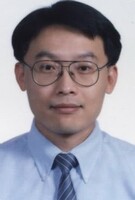
Jenq-Horng Liang (梁正宏)
Adjunct Professor Department of Engineering and System Science
PhD, University of Wisconsin
Fields of Interest
- Ion Implantation
- Accelerator Analysis
- Plasma Applications
- Medical Physics
- Radiation Shielding
- Nuclear Fuel management
Research Statement
Doping materials:Conduct theoretical and experimental investigations of as-implanted and as-annealed dopant depth profiles due to ion implantation
Metal silicide film formation:Perform ion beam synthesis (IBS) in fabricating WSi2, MoSi2, TaSi2, NiSi2 etc. thin films for modern semiconductor electronic devices
Ion beam analysis:Work on ion beam analysis (IBA) for characterizing material surface properties, such as Rutherford backscattering with channeling (RBS/C) techniques for identifying damage depth profiles
Carrier depth profile measurements:Employ scanning capacitance microscopy (SCM) together with atomic force microscopy (AFM) in probing 2-D carrier depth profiles
Surface modification of materials:Advance plasma immersion ion implantation (PIII) techniques in treating material’s surface properties modification
Simulation chemical erosion:Develop computer simulation of chemical erosion of graphite (via forming volatile molecules such as CH4) due to bombardment of H, D, T ions in nuclear fusion reactors
Ion-surface interaction:Lead novel techniques in detecting ion-surface interaction such as energy loss due to ion implantation
Polyatomic ion implantation:Direct innovative molecular and cluster ion implantation techniques in modern ultra-shallow junction device processing
Dynamic ion implantation:Explore ion transport behaviors in materials due to high fluence and high fluence rate ion implantation
Smart cut applications:Exploit smart cut techniques in manufacturing Si-On-Insulator (SOI) devices
Molecular dynamics simulation:Extend molecular dynamics (MD) method in simulating radiation damage due to ion implantation
Radiation detector improvements:Upgrade Moxon-Rae gamma-ray detector in geometric configuration, detection efficiency, and 2-D detection applicability
Radioactive stent development:Use the endovascular irradiation method for effectively suppressing the proliferation of intimal muscle cells in order to lessen narrowing or restenosis in the vessels
Epidemic origin discovery:Endeavor the discovery of epidemic origin such as Chlamydia trachomatis (C.T.) IgG for localized people
Nuclear medicine production:Utilize cyclotron in producing radioactive nuclear medicine
Nuclear fuel management:Operate computer simulation of nuclear fuel management studies such as core loading pattern and fuel misleading analysis for commercialized nuclear fission reactors
Publications (Selected):
- J.H. Liang and K.Y. Liao, "Improved algorithm for calculation of range and range straggling in ion implantation," Nuclear Instruments and Methods, B119 (1996) 331-336.
- J.H. Liang and K.Y. Liao, "Skewness of implanted ion profiles," Radiation Effects and Defects in Solids, 143 (1998) 225-238.
- J.H. Liang, "Theoretical formulation for calculating lateral spread of implanted ions," Nuclear Instruments and Methods, B134 (1998) 157-160.
- S.H. Jiang, J.H. Liang, J.T. Chou, U.T. Lin, and W.W. Yeh, "A hybrid method for calculating absolute peak efficiency of germanium detectors," Nuclear Instruments and Methods, A413 (1998) 281-292.
- J.H. Liang and D.S. Chao, "Formation of tungsten silicide film by ion beam synthesis," Surface and Coating Technology, 140 (2001) 116-121.
- .J.H. Liang, M. Mayer, J. Roth, and W. Eckstein, "Computer simulation of chemical erosion of graphite due to hydrogen ion bombardment," Nuclear Instruments and Methods, B202 (2003) 195-200.
- J.H. Liang and S.L. Chiang, "Characterization of BSi molecular ion implantation," Nuclear Instruments and Methods, B206 (2003) 932-936.

 office
 ess.nthu.edu.tw